
Low and No Alcohol: Why NZ Venues Can’t Afford to Ignore It
There is a quiet revolution happening at the bar, and it has nothing to do with technology. Low and no alcohol drinks have gone from a token afterthought, a lonely lemonade for the designated driver, to one of the fastest-growing categories in hospitality. Yet plenty of New Zealand venues still treat the alcohol-free option as an embarrassment tucked at the bottom of the menu. If that sounds like your venue, you are almost certainly leaving money on the table, and this is why.
This Is Not a Fad. Look at the Numbers.
It would be easy to dismiss this as a passing wellness trend. The data says otherwise. New Zealanders are drinking materially less than they used to: alcohol available for consumption has fallen from 12.24 litres per person in 1986 to just 7.86 litres by late 2025. This is not a blip, it is a decades-long structural shift. Globally, the picture is even starker. According to drinks analysts at IWSR, no-alcohol volumes grew around 9% in 2025 while traditional alcohol crept along in low single digits, and the category is forecast to expand roughly 36% by volume between 2024 and 2029.
Who Is Actually Ordering These Drinks
Here is where most operators get it wrong. They picture the low and no alcohol drinker as a non-drinker, a pregnant guest, or a designated driver, a small, fixed group. The reality is far bigger and far more valuable. As reported by the NZ Alcohol Beverages Council, Gen Z in particular drink less frequently but more intentionally, weaving no-alcohol options through nights that still include the occasional full-strength drink. These are not abstainers. They are your regular customers, choosing zero-proof on a Tuesday and a proper pour on Saturday. If you only stock for the “real” drinkers, you are underserving the same people on half their visits.
There is even a new driver almost nobody in hospitality is talking about yet. The rapid rise of GLP-1 medications like Ozempic and Wegovy is quietly reducing appetite and alcohol cravings for a growing number of people, and pill-based versions arriving in 2026 will accelerate that. Whatever you think of it, it means the pool of customers who want a genuinely good drink without the alcohol is growing from multiple directions at once. This is not a demographic you can wait out.
“The customer who orders a mocktail tonight is often the same one who ordered a double last weekend. Serve them badly once, and you risk losing both visits.”The moderation mindset
The Part That Should Grab Every Operator: Margin
Set aside the culture shift for a moment and look at the economics, because this is where the argument becomes impossible to ignore. As noted by hospitality educators at EHL, mocktails typically carry lower ingredient and tax costs, which means larger profit margins than their alcoholic equivalents. A well-made non-alcoholic cocktail can command a premium price, four dollars, six dollars, more, while costing you a fraction of what a spirit-based drink does, with no excise tax attached. You are selling craft, presentation and experience, not expensive liquor. For a sector fighting to protect every point of margin, that is not a niche. That is a gift.
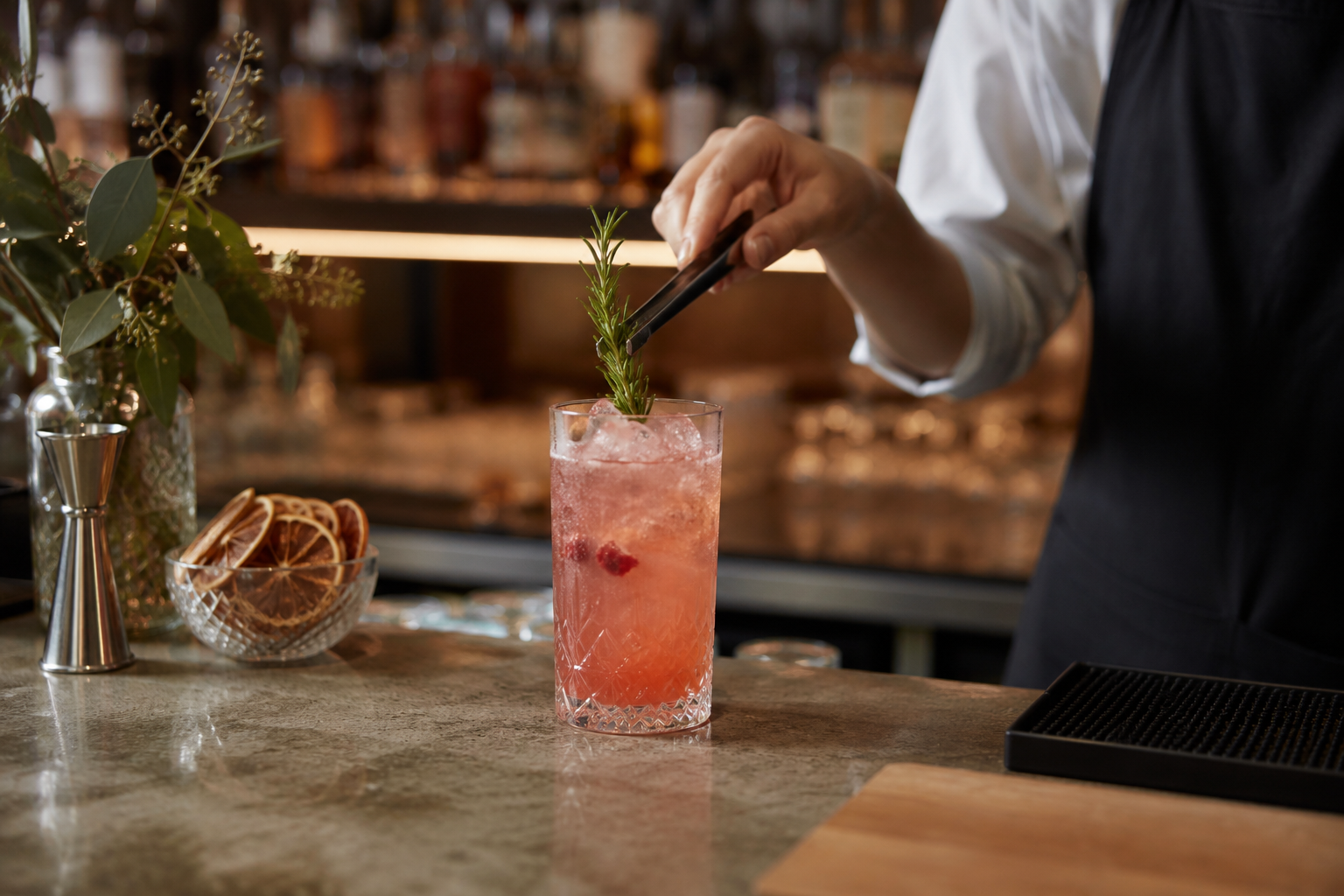
The mistake is treating the alcohol-free option as a cost of doing business rather than a profit centre. A soda and lime made grudgingly earns you almost nothing and satisfies no one. A thoughtfully built, beautifully garnished non-alcoholic drink, given a real name and a real place on the menu, earns you a strong margin and, just as importantly, signals to a whole category of guest that they are genuinely welcome. One of those approaches grows your business. The other quietly shrinks it.
What Good Actually Looks Like
Give them equal billing. Put your best non-alcoholic drinks in the main drinks list, not exiled to a sad footnote. Placement signals respect.
Name them properly. “Seedlip & tonic with grapefruit” sells. “Mocktail” undersells. Treat them like the craft drinks they are.
Train your staff to offer, not just pour. A server who can confidently recommend a no-alcohol option lifts both the guest experience and the average spend.
Price for value, not apology. These drinks take skill and time. Charge accordingly. Guests choosing no-alcohol are not looking for a discount, they are looking for quality.
Keep the stock consistent. Nothing kills the category faster than “we’ve run out.” If it is on the menu, it needs to be available every service.
Notice that almost every one of those points comes back to two things: your menu and your team. A great low and no alcohol offering is really just good hospitality fundamentals applied to a category most venues have neglected. It is the same principle we wrote about in why your front of house cannot sell what they have never tasted: your staff cannot recommend, and your guests cannot fall in love with, a drink nobody has bothered to make properly.
The Honest Bottom Line
The venues that will win the next decade are not the ones clinging to the idea that hospitality revolves around alcohol. They are the ones reading the shift, meeting guests where they actually are, and building an offering, and a team, that treats every customer as worth serving well. Low and no alcohol is not a threat to your bar. Handled properly, it is one of the highest-margin opportunities on your menu. Getting your menu, your training and your stock working together to capture it is exactly the kind of operational edge we are building into Pip.
Frequently Asked Questions
What does “low and no alcohol” actually mean?
Low and no alcohol refers to drinks with little or no alcohol content, including alcohol-free beer, wine and spirits, as well as crafted non-alcoholic cocktails (often called mocktails). “No alcohol” generally means 0.0 to 0.5% ABV, while “low alcohol” typically covers drinks up to around 1.2% ABV.
Are non-alcoholic drinks more profitable for bars and restaurants?
Often, yes. Non-alcoholic cocktails typically have lower ingredient costs and carry no alcohol excise tax, which can mean higher margins than spirit-based drinks, especially when priced for the craft and experience rather than discounted.
Is the low and no alcohol trend actually growing, or is it hype?
It is growing and structural, not hype. New Zealand’s per-person alcohol consumption has fallen steadily for decades, and global no-alcohol volumes are forecast to grow around 36% by volume between 2024 and 2029, far outpacing traditional alcohol.
How should a venue add low and no alcohol options to its menu?
Start by putting quality non-alcoholic drinks in the main menu with proper names and pricing, train staff to recommend them confidently, and keep stock consistent. Treat them as a genuine part of your offering rather than an afterthought, and price them for the skill and experience they deliver.