

How to Reduce Restaurant Labour Costs in NZ (Without Cutting Staff)
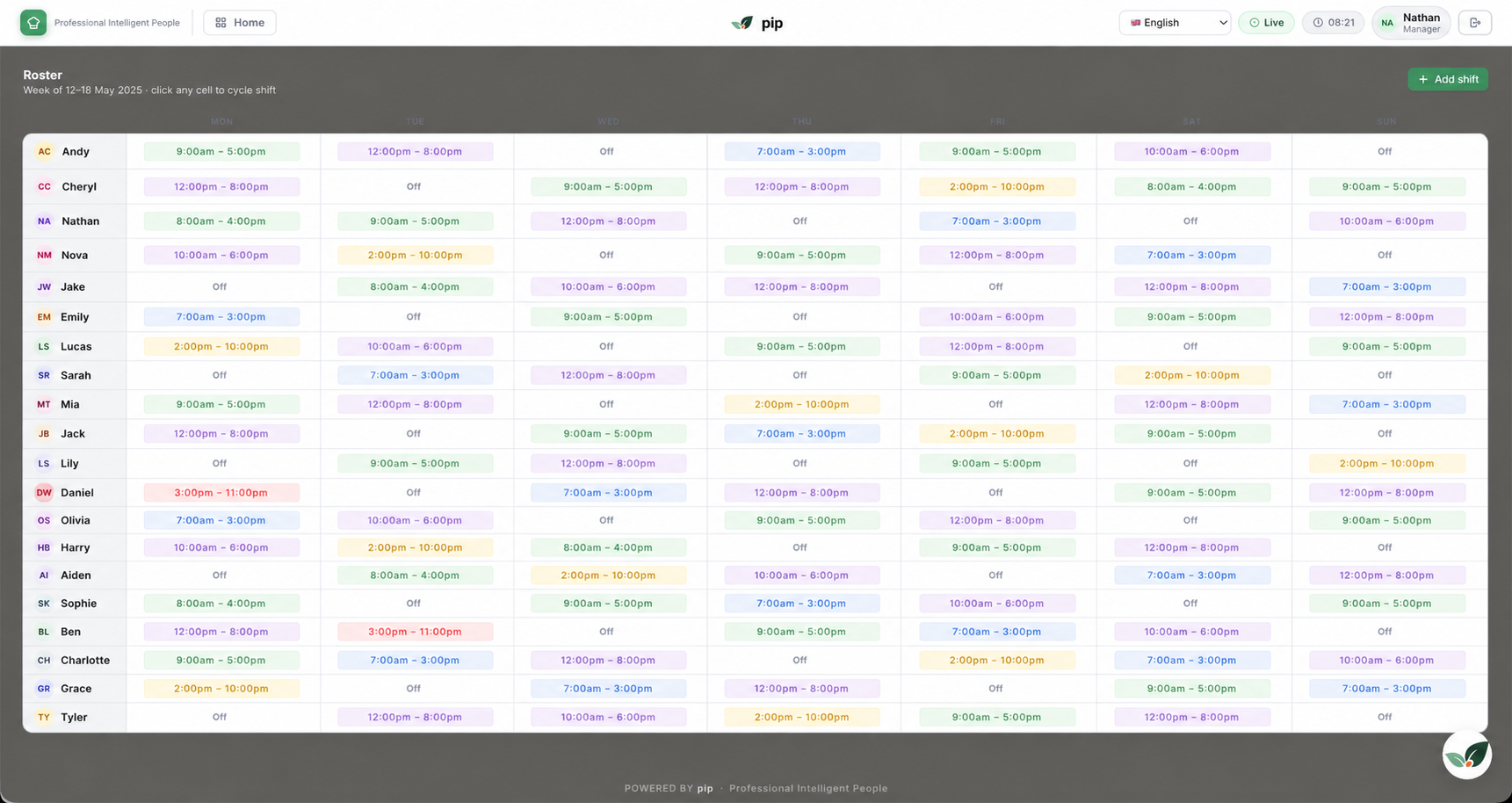
For most New Zealand hospitality operators, labour is the single biggest cost on the P&L, and the one that feels hardest to control. With the minimum wage now at $23.95 an hour and wage costs at record highs, the pressure is real. But here is the mistake too many owners make: when margins tighten, the first instinct is to cut shifts. That almost always backfires. This is a practical guide to reduce restaurant labour costs the smart way, by removing waste and inefficiency rather than thinning out your floor on a busy Saturday.
First, Know Your Real Number
You cannot manage what you do not measure. Labour cost percentage is simply your total labour cost divided by total revenue, times 100. The catch is that “total labour cost” is more than wages: it includes payroll costs, holiday and leave entitlements, KiwiSaver contributions, and the hours you and your managers work but often forget to count. According to the Restaurant Association of New Zealand’s remuneration data, labour costs have hit record highs, averaging 35 to 40% of revenue for many businesses, with the median café or restaurant sitting around 34%.
But a single percentage hides the real story. A fine-dining room running at 33% might be perfectly healthy, because the service model justifies it and the menu prices carry it. A quick-service café at 33% has a problem. The number only means something next to your format, your average spend, and your margins. More useful still is to track it weekly, not just at month-end, and to look at it by daypart, because your quiet Tuesday lunch and your packed Friday dinner tell completely different stories.
If you are sitting above the range for your format, do not reach for the roster to start deleting shifts. There is almost always a smarter path. Below are the levers that genuinely move the number, without your guests ever noticing a drop in service.
The Levers That Actually Work
Schedule to demand, not to habit
The biggest source of wasted labour is rostering the same shape every week regardless of trade. Look at your actual sales by day and by hour, then match staffing to it. Operators who align rosters tightly to real demand routinely find 2 to 4% of pure waste, people rostered on during genuinely quiet stretches. This single habit outperforms almost everything else.
Make overtime visible before it happens
Overtime is easiest to kill before it occurs, not on the timesheet afterwards. If you can see who is approaching full hours in real time, you can redistribute before you are paying premium rates to cover a gap. Overtime that surprises you at payroll has already cost you.
Cross-train so a smaller team covers more
A server who can also make coffee, or a prep cook who can jump on the line, gives you flexibility that a single-role team never can. Cross-training lets you run a leaner, more capable crew, reduces the panic-cost of a sick call, and tends to lift retention because staff feel more valued.
Trim the menu, trim the prep
A sprawling menu quietly inflates labour. More dishes mean more prep, more skills required, and more time lost during service. Tightening the menu around what sells and what carries margin cuts prep hours without touching a single shift.
Kill the admin time-sink
Building a roster by hand in a spreadsheet can eat four or more hours of a manager’s week, and a manager’s time is some of the most expensive labour you have. Getting rostering, time tracking and staff records off paper frees genuinely costly hours and reduces the errors that lead to overpayments.
“Cutting labour to hit a benchmark and ruining service is the classic trap. Fewer staff on a busy Saturday saves a slice of wage cost and loses you covers, tips and regulars.”The mistake to avoid
Don’t Forget The Other Side Of The Ratio
Labour cost percentage is a ratio, which means there are two ways to improve it. Everyone fixates on the top half, the wage bill. But the bottom half, revenue, is just as powerful. If you lift your average spend per customer through better upselling, a sharper menu, or stronger front-of-house confidence, your labour percentage falls even if your wage bill stays exactly the same. Training your team to sell well is a labour-cost strategy, even though it never touches the roster. The best operators work both halves of the ratio at once.
This is why we keep saying that a confident, well-trained team is one of the most underrated financial assets a venue has. It is the same argument we made in our piece on why your front of house cannot sell what they have never tasted: the people on your floor are not just a cost line, they are your single biggest lever on revenue.
The Change Coming In 2028
There is one more reason to get your labour systems in order now. New Zealand has just replaced the Holidays Act with the new Employment Leave Act, which shifts leave from a weeks-and-days model to an hours-based one from around 2028. For a sector built on casual and variable hours, clean, accurate records of who works what will move from “nice to have” to “essential.” If you are not across it yet, we broke down exactly what the Employment Leave Act means for hospitality in a separate guide.
The Bottom Line
Reducing labour costs is not about squeezing your people. It is about removing the waste that sits between a good team and a healthy margin: the mismatched rosters, the surprise overtime, the hours lost to manual admin, the untrained upsell that never happens. Fix those, and the percentage takes care of itself, without a single guest noticing anything except, hopefully, better service. That is exactly the kind of quiet, practical leverage we are building into Pip.
Save hours on the admin that drives up labour costs
Our free guide gives you 25 copy-paste AI prompts built for hospitality, including rostering, training and the weekly admin that quietly eats your managers’ hours. No fluff, no jargon.
Get the free guide →Frequently Asked Questions
What is a good labour cost percentage for a restaurant in NZ?
It depends on your format. Cafés and quick service typically target 20 to 25%, casual dining 25 to 30%, and fine dining 27 to 32%. The New Zealand median across cafés and restaurants sits around 34%. A benchmark is a sense-check, not a goal, judge it against your format, average spend and margins.
How do I reduce restaurant labour costs without cutting staff?
Focus on removing waste rather than headcount: schedule to actual demand instead of habit, catch overtime before it happens, cross-train staff so a leaner team covers more, tighten your menu to cut prep hours, and move rostering off spreadsheets to save manager time. You can also improve the ratio by lifting average spend through better upselling.
Why shouldn’t I just cut shifts when labour costs are high?
Cutting shifts to hit a benchmark usually backfires. Understaffing a busy period costs you covers, tips, service quality and repeat customers, which often outweighs the wage saving. It is almost always better to remove inefficiency than to thin out a genuinely busy floor.
How often should I check my labour cost percentage?
Weekly at minimum, and ideally by daypart. Checking only at month-end means you find problems long after you could have acted on them. Seeing the number while you can still adjust the coming week’s roster is what turns it from a report into a tool.